Homecoming

Homecoming
Redeployment Ceremony; April 22nd, 2008

In The News

Articles, pictures, and other news about the 2-32 Field Artillery, and the area (Yarmouk and Hateen neighborhoods) where they've been working. For posts older than 30 days, check the archive links on the left, or use the searchbox at the top of the page.

[last update: April 22, 2008]

Thursday, September 13, 2007

The Time Has Come, the General’s Here: Petraeus Preps for Testimony on Iraq

The Time Has Come, the General’s Here: Petraeus Preps for Testimony on Iraq
The New York Times
THOM SHANKER
September 8, 2007

Gen Petraeus met with LTC Gadson at the opening of the new Walter Reed rehab center (see paragraph in bold)

WASHINGTON, Sept. 7 — Although a resident of Baghdad, General David H. Petraeus is assigned military housing just above the Potomac River at Fort Myer, Va., whose lush grounds give way to the somber geometry of simple white tombstones at Arlington National Cemetery

General Petraeus arrived quietly on Tuesday night with a small team that included his brain trust: three colonels, all Iraq veterans and Ph.D.’s, along with a Rhodes Scholar wearing captain’s rank.

He has spent long hours in those quarters studying three large binders of classified statistics, maps and analysis, and will head to the Pentagon on Sunday for a final dress rehearsal, including tough questioning, in a process known in the military as a “murder board.”

Already, the testimony about the status of Iraq that General Petraeus will deliver to Congress beginning Monday has become the most anticipated by an Army officer since April 29, 1967, when, under President Johnson, Gen. William C. Westmoreland traveled from Vietnam to address a joint meeting of Congress at a time of deep public doubts about a faraway war.

In recent weeks, President Bush has himself made high-profile speeches on Iraq and visited a desert base west of Baghdad.

But as it seeks to sell Americans and the Congress on the wisdom of continuing an unpopular conflict, the White House clearly wants to make General Petraeus its public face, believing that the lean, 54-year-old scholar-warrior will prove more successful in making the case than Mr. Bush has been.

“The one who should be trusted more than anyone on this is General Petraeus,” said Geoff Morrell, the Pentagon press secretary.

One senior administration official involved in planning the testimony expressed hope that the words of General Petraeus and Ambassador Ryan C. Crocker would be given particular weight as the recommendations not of politicians but of “professional soldier and professional diplomat.”

The appearance will be the culmination of a carefully choreographed campaign that has included the lobbying of lawmakers by White House officials and supporters, and the coordination of a $15 million, 20-state television advertising blitz by a new group called Freedom’s Watch, led by a former White House press secretary, Ari Fleischer.

Military aides have coordinated the general’s schedule with the White House, but officials confirmed that some suggestions for public appearances offered by Mr. Bush’s staff for General Petraeus had been rebuffed.

The fact that most of the administration’s projections about Iraq since the invasion of 2003 have not been borne out has contributed to a deep erosion in White House credibility.

Only after General Petraeus and the ambassador have made their case in two days of hearings does the White House plan to present its own strategy, which is to hew closely to what General Petraeus recommends, sustaining the American involvement in Iraq at a high level.

While early accounts of the general’s testimony have been reported, those hoping for a further public preview will not get any help. He is under wraps, with no advance interviews scheduled and no appearances on the weekend talk shows, which traditionally open the policy plans and politicking of the week ahead.

The first official word that anyone is scheduled to hear of General Petraeus’s assessment will come when he opens his testimony before a joint session of the House Armed Services Committee and the House Committee on Foreign Affairs. The advance text is not even being previewed for committee members.

The general and the ambassador then appear Tuesday, the anniversary of the Sept. 11 attacks, in testimony first before the Senate Foreign Relations Committee and in the afternoon before the Senate Armed Services Committee for what one administration official has called “closing arguments.”

General Petraeus has kept in close touch this week with the Defense Department’s most senior civilian and military leaders, using the secure communications within his traditional brick residential quarters at Fort Myer.

But he also has taken short breaks for walks with his wife, the former Holly Knowlton, daughter of a retired superintendent at West Point; for dinner with their daughter, who lives in the area, and for lunch with his wife’s parents.

On his daily jogging route he maintains a brisk, steady pace over a seven-mile route, snaking from Fort Myer, across the Potomac and through Georgetown.

The general holds a doctorate in international relations from the Woodrow Wilson School of Public and International Affairs at Princeton University and has spent most of the past four years in Iraq, first in command of the 101st Airborne Division during the 2003 invasion and for the early occupation of northern Iraq, based in Mosul.

On his second tour, he was assigned the training of a new Iraq Army, a posting that generated a Newsweek cover in 2004 asking, “Can This Man Save Iraq?” The headline certainly set up General Petraeus for potshots from some at the Pentagon, and his anointment as savior of an entire military campaign worried many of his general officer colleagues, and angered not a few others.

The general has also been criticized for writing an op-ed essay before the 2004 election that a number of commentators said far overstated progress in Iraq.

The decision to place the general and the ambassador as the advance guard for the president’s own announcement on Iraq strategy continues with what one aide called “an aggressive schedule” even after the two days of hearings.

A joint news conference by General Petraeus and Ambassador Crocker is scheduled for Wednesday. The venue will be a large public hall, not at the Pentagon or State Department; the location remains undisclosed for security reasons. Interviews with television anchors and newspaper and magazine reporters are planned.

“Presidents galore have hidden behind the military and tried to use the military in war or national security situations in which there is controversy or their policies are under assault,” said Richard H. Kohn, a history professor at the University of North Carolina at Chapel Hill who specializes in civilian-military relations.

“There is never a perfect congruence, but this seems to me to be like Johnson bringing Westmoreland back in ’67 to persuade the Congress and the country of progress in Vietnam.”

Mr. Kohn said that “Westmoreland knew what was going on, and knew the problems — but also believed there was progress.” If General Petraeus “is to keep faith with his profession and his soldiers,” Mr. Kohn added, “he simply has to tell the truth as he sees it and answer the questions that both the president and the Congress pose to him.”

Another comparison offered by some is to the address by Gen. Douglas MacArthur in 1951, although there is a stark difference: MacArthur spoke to Congress after he was removed by President Truman over his handling of the Korean War.

After his testimony, General Petraeus will meet with the Iraqi ambassador to Washington, Samir al-Sumaidaie, and gather with a group of his West Point colleagues, Class of 1974.

General Petraeus’ schedule includes a visit that will be viewed as honoring the memory of the 3,071 Americans killed in action in Iraq and a tribute to the 12,476 wounded too severely to return to duty when he attends the opening of a rehabilitation center at the Walter Reed Army Medical Center. The general will spend time there with one of his former battalion commanders, Lt. Col. Greg Gadson, a West Point football star who lost both legs to a roadside bomb in Iraq.

On Friday, General Petraeus left Washington to visit Fort Benning, Ga., where he spoke at a graduation ceremony for new Army Rangers, and stood at the drop zone as his son, an R.O.T.C. cadet, made his final jump of airborne training.

He also sent an open letter to all American soldiers, sailors, marines and air crews serving in Iraq, to alert them to his planned testimony.

The general told the troops that he would appear before Congress “conscious of the strain on our forces, the sacrifices that you and your families are making, the gains we have made in Iraq, the challenges that remain, and the importance of building on what we and our Iraqi counterparts have fought so hard to achieve.”
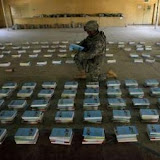
Real warriors take field at West Point

Real warriors take field at West Point
The Providence Journal
JIM DONALDSON
September 9, 2007

LTC Gadson gave the pre-game speech for the West Point game last week.
Army went on to beat Rhode Island.
coincidence? we think not.
(Army takes on Wake Forest this weekend here in Winston.)

Knute Rockne had The Gipper. Stan Brock has Lt. Col. Greg Gadson.

“He’s an Army football player who lost both his legs in Iraq,” said Brock, who is in his first season as coach of the Cadets. “He came up from Walter Reed (hospital) to speak to the team. It was very moving. He told them: ‘Your mission here is to win football games. After you graduate, your mission is to serve and protect your country.’ ”

At West Point, the reality is that a football player has a better chance of going into combat than he does of going to the NFL.

“They know what they’re in for,” said Brock. “These are young men who came to West Point in time of war.”

These are very special young men that the University of Rhode Island Rams will be playing against tomorrow afternoon at Michie Stadium, high above the Hudson River —young men who not only are dedicated to football, but also to defending the nation.

“We don’t get everybody we want,” Brock said this week. “Not everybody wants to come here. But the kids who do are kids you want to coach. They’re not always the most talented athletes. They’re not always blue-chippers. But they don’t ever lay down for anybody.

“These kids are the kind you want to be around. They’re great kids. I feel very privileged to be here, coaching them. West Point is a special place.”

It was during World War II that Gen. George Marshall, a graduate of the Virginia Military Institute, said: “I want an officer for a secret and dangerous mission. I want a West Point football player.”

Such a man is Lt. Col. Gadson.

A defensive end at Army, Gadson became an artillery officer after graduating from the U.S. Military Academy in 1989. He served in Bosnia, in Operation Desert Storm, and was a battalion commander with the 32nd Field Artillery in Iraq when he was severely wounded in May.

Four years ago, when a winless Army football team came to Honolulu to play the University of Hawaii, Gadson attended a practice at Schofield Barracks, where he was stationed with the 25th Infantry Division.

“I truly believe we can be successful,” he said then in an interview with the Honolulu Star-Bulletin. “We never have a lot of size, but size isn’t everything. Attitude, discipline — you can make those a premium to be successful.”

Brock would be successful if he could recruit players as big, and as talented, as he was.

At 6-6, 290, he was even bigger than his “big” brother, Pete (6-5, 270), who was an offensive lineman for the New England Patriots for 12 years, from 1976 through ’87. Both were first-round draft picks out of Colorado, where Pete was an all-Big 8 center and Stan, an all-conference tackle. Their brother Willie also played at Colorado and spent a season with the Detroit Lions, and another brother, Ray, played at LSU.

Taken 12th overall by the Saints in 1980, Stan played 13 seasons in New Orleans, where he is a member of the franchise’s Hall of Fame, then three more in San Diego, where he was a member of the Chargers’ AFC championship team in 1994, coached by Bobby Ross.

It was Ross who brought Brock to Army in 2004, as his offensive line coach. Prior to coming to West Point, Brock had been coaching in the Arena Football League.

When Ross retired after last season, Brock was named his successor.

“Stan commands a great deal of respect from our players,” said Kevin Anderson, Army’s director of athletics. Among the reasons for that are that, when he first came to West Point as an assistant, he went through “Beast Barracks” — the demanding, summer indoctrination program for incoming plebes.

“He wanted to make sure the kids knew he appreciated the kinds of things they have to go through,” Pete Brock said of his younger brother. “He loves it there — the culture, the environment.”

Stan Brock wants his players to be leaders and role models for the Corps of Cadets.

“They carry a heavy academic load,” he said. “They’re taking 18 credit hours, in difficult courses.”

That is in addition to the demands of playing big-time college football and the regimen of military life.

“As Army football players,” Brock said, “they need to do more. They need to be leaders.”

They need to be like fullback Mike Viti, who, in addition to being a team captain, also is one of four cadet regimental commanders.

“Mike Viti,” said Brig. Gen. Robert Caslan Jr., the commandant of cadets at West Point, “is the type of inspirational leader America needs leading her sons and daughters, both at West Point and in today’s Army.

“He is a totally selfless team player. He’s a tremendous leader and role model for every member of the Army football team, and for every member of the Corps of Cadets.”

He is the type of player that makes Brock proud to be coaching at West Point.

“These kids are very goal-oriented,” he said. “They know where they’re going, and how to get there.”

Wednesday, September 12, 2007

Dagger Brigade Weekly Slides

Dagger Brigade Weekly Slides
Dagger Brigade Combat Team Official Site
Week: Sept 3 - Sept 9
Slides: 33, 34

Alpha Battery Spends a Day With Local Businessmen
  • 1SG Frederick Johnson receives the royal treatment from a local barber
  • 1SG Johnson pumps money into the local economy
  • 1SG Johnson and SSG Ahmad Brunson assist a local baker as he makes his daily batch of samone bread
Bravo Battery Re-Opens Yarmouk Neighborhood Advisory Council Hall, Conducts Medical Program
  • CPT Morgan joins community leaders for the ribbon cutting ceremony
  • SPC Defreest evaluates an infant
  • PFC Sabo checks an Iraqi child's vital signs
  • SPC Defreest and CPT Foster set up vitamins and medicine to distribute to local citizens

Better security affords chance to build economy

Better security affords chance to build economy
Lancaster Online
By FIRST LT. NEAL RICE
Sep 08, 2007

Hello from Baghdad,

Another month has passed us by and it's high time for an update to you, our devoted supporters. I cannot thank you enough for what you are doing. Be assured that your care packages, notes, and prayers (along with the start of football season) are a huge boost to morale. Please keep them coming and know that we count ourselves fortunate to have you behind us.

Well, it's been another decent month here on the ground. Our area has remained relatively calm, though we have had a few incidents of roadside bombs and small arms fire…a poignant reminder that we are, in fact, in a war zone.

Thankfully, none of the attacks against us were successful and your brave soldiers remain well protected, I believe, by the Hand of Providence. I wish you could see first hand how these young men press on towards the goal despite knowing the dangers that confront them each time they leave the wire. They are an admirable bunch, truly the best of young America and, in the end, all the incentive I need to keep going.

This month has been quiet enough that we have been able to focus on building the economy and essential services. In fact, security has continued to improve throughout much of Baghdad. I believe this is the result of the "surge," which has given us the appropriate number of boots on the ground to execute the difficult job we face.

Lately we have been working diligently to open new businesses. In fact, just this week we were able to help open a grocery market, a hardware store, and an air conditioning repair shop. We have established small business grants in an effort to kick start the economy in our area and the three new businesses are a result of that program.

I personally delivered the finances to each of the business owners and I want you to know that I made it clear this money is a gift from the American people to the Iraqi people. I also emphasized that I would be watching closely to ensure my countrymen's money is not wasted — and I will. It's businesses like these that hold some promise for the local economy and, step by step, there is progress on the economic front.

Lately, I have seen improvement in the local government council. Either my boss or I meet with them each week and help direct their evolution into, we hope, a functioning and relevant local government. I am often frustrated by their slow progress, but the last few weeks I have seen signs that they may actually begin to understand their proper role.

As we pass more responsibility to them they will need continual guidance if they are to succeed. Yet we must remember that they simply do not understand how a representative government should function. I find hope in the little measures of progress, most notably their recent acquiescence to the idea that they must actually talk with the people they represent if they hope to understand the problems they face.

The simplest democratic ideals, you see, are entirely foreign to them. And so you can see part of the reason why, four and a half years later, Iraq is not where we thought it would be.

Friends, the challenges here are significant, but not insurmountable. I find reasons for doubt when I watch the Iraqi politicians wander aimlessly about their parliament or, more recently, vacation with vigor as their own troops, and ours, fight for peace in the capital.

But I also see signs of hope. I see hope in the relentless and meaningful work of your soldiers every day. I see hope in those Iraqis I meet who really do want a future for themselves and their children. I see hope in the businesses we open and the local leaders who are beginning to get it.

The way ahead for Iraq is bottom up. In the absence of Iraqi leadership at the highest levels, the future belongs to those with the courage to build from the ground up. The businessman, the religious leader, the policeman, the local councilman who decides to put aside the past and the deep divides of history in order to move forward side by side, not as Shia or Sunni, but as Iraqis — these people are the hope of Iraq.

On the ground, at the lowest level, I'm seeing more of these people. Let's pray together that the tide of change grows and strengthens quickly, that a day in the not so distant future may hold the promise of peace for Iraq.

Please do not forget that you are a big part of the reason we keep moving forward here. We will never forget your steady encouragement as we give all we have to make this thing work.

Thank you, sincerely and forever.

Tuesday, September 11, 2007

Iraqi Army, U.S. Special Forces detain extremist Islamic Army cell leader, 9 insurgents

Iraqi Army, U.S. Special Forces detain extremist Islamic Army cell leader, 9 insurgents
Multi-National Corps – Iraq Official Website
September 10, 2007

Iraqi Army Scouts detained a high-level insurgent working for both the Islamic Army and al-Qaeda in Iraq during a raid Sept. 9 in the Yarmouk area, near Baghdad.

The suspect is accused of ordering the assassination of a security guard for a local school and the attempted murder of an Iraqi policeman. In addition, he allegedly orders his cell members to attack citizens who oppose his terrorist criminal activities and those who support efforts to provide security and stability in the region.

Reports say his terrorist cell is responsible for numerous kidnappings, murders, extra-judicial killings and improvised explosive device and indirect fire attacks against Iraqi and Coalition Forces.

Forces detained seven other individuals believed to be linked to this terrorist cell while seizing four AK-47 assault rifles, one 9mm pistol and a shotgun.

In a separate operation, members of an Iraqi Army Reconnaissance unit detained a suspected terrorist Sept. 9 in Taji during an air assault operation.

The cell member acquires fuel and materials to prepare vehicle borne improvised explosive devices for use against Iraqi and Coalition Forces. Forces detained one other suspicious individual during the raid and seized two weapons.

U.S. Special Forces were advisers during both operations and no Iraqi or U.S. Forces were injured.

Friday, September 7, 2007

About-Face: Critics warm to the surge.

About-Face: Critics warm to the surge
National Review Online
Daveed Gartenstein-Ross
Sept 7, 2007

Daveed was previously embedded with B Battery several months ago. The article's focus is more public perception of how the war is going - no new information about 2-32, but mentions his time with them.

Wednesday, September 5, 2007

Soldiers Lend a Hand in School, Governance Building Renovations

Soldiers Lend a Hand in School, Governance Building Renovations
Digital Video and Imagery Distribution System
BlackAnthem Military News
1st Lt. Brian Cooke; 2nd Battalion, 32nd Field Artillery
09.05.2007

Multi-National Division-Baghdad Soldiers assisted with the renovation of a kindergarten and a neighborhood advisory counsel building in the western Baghdad neighborhoods of Hateen and Yarmouk, signaling the end of a pair of summer-long reconstruction projects.

Task Force Patriot, the 2nd Battalion, 32nd Field Artillery, attached to 2nd Brigade, 1st Infantry Division, initiated reconstruction efforts at the Al-Tameen Kindergarten in Hateen and the Neighborhood Advisory Council headquarters in Yarmouk in late July.

The Noor Baghdad Company started work at the Al-Tameen Kindergarten on July 21. Electricians re-wired the school to more efficiently distribute the power received from a local generator. Plumbers replaced hundreds of meters of piping and installed new toilets and bathroom fixtures throughout the school. Contractors re-tiled every bathroom, repaired cracked and crumbling tile floors in the hallways and classrooms, and painted the entire interior of the school. Day laborers removed the trash and debris which had accumulated on the school’s grounds and cut down overgrown vegetation. The contracting firm also removed rusted out playground equipment and replaced it with new, safer equipment.

The task force will mark the beginning of the new school year and welcome students back with a cooperative medical engagement, in which U.S. and Iraqi army doctors will provide a free medical screening to all returning students. The event is currently scheduled for late September.

From July 23 to Aug. 21, the Noor Baghdad Company also worked to repair and revitalize the headquarters of the Yarmouk Neighborhood Advisory Council.

Workers fixed a sewage leak in the bathrooms and replaced pipes, toilets, and faucets. They also re-wired the electrical system, painted the interior of the building and removed dead and unsightly vegetation from the NAC’s front courtyard.

“Part of being in government means empowering the people,” said Lt. Col. Mike Lawson, commander of Task Force Patriot. “In spending the money to renovate the Yarmouk NAC, we’ve given the NAC the ability to better engage their constituents. We’ve empowered the NAC to go out and do likewise.”

Task Force Patriot will mark the re-opening of the Yarmouk NAC building with a ribbon-cutting ceremony and subsequent cooperative medical engagement, which will be presided over by Dr. Faleh al-Mansour, the chairman of the Yarmouk NAC.

Dagger Brigade Weekly Slides

Dagger Brigade Weekly Slides
Dagger Brigade Combat Team Official Site
Week: August 27 - Sept 2
Slides: 32, 33, 34

Task Force Patriot Awards Ceremony

  • LTC Lawson pins on 1SG Johnson's Army Commendation Medal.
  • SGT Theodore stands ready to be recognized as the Brigade NCO of the Quarter
  • The Task Force assembles around the Battalion Commander for a review of its first six months in Iraq
Alpha Batter leads checkpoint improvement operation
  • Operating under the cover of darkness, 2nd platoon, Alpha battery conducted a checkpoint improvement operation in conjunction with elements from 299th Forward Support Battalion and 2/5/6 Iraqi Army. The operation was part of a larger effort to standardize all Iraqi Army checkpoints in Yarmouk and Hateen.
Task Force Patriot promotes five non-commissioned officers
  • LTC Lawson promotes David Francis and Daniel Thompson to SSG
  • Lawson promotes Omar Rosado and Travis Ueke to CPL
  • LTC Lawson promotes Jilberto Herra to MSG

Sunday, September 2, 2007

Security Developments

Round-up of daily violence
McClatchy Newspapers
2 September 2007
Hussein Kadhim

Around 8 a.m., a roadside bomb targeted a police patrol at Yarmouk neighborhood (west Baghdad) near Tarfihi (entertainment) club injuring three policemen.

Wednesday, August 29, 2007

ONE STEP, ONE DAY, ONE HELPING HAND AT A TIME

ONE STEP, ONE DAY, ONE HELPING HAND AT A TIME
Daggers Edge Magazine Volume 1, Issue 20
By Pfc. Phillip Goral
August 21, 2007

1st Platoon, Alpha Battery, the “Lightfighters,” was built up from the ground up at Fort Riley, Kansas, as part of a 105mm Field Artillery unit using guns we jokingly called, “the Pop Guns.” We trained to fight as artillerymen for a year. We spent countless days in the field shooting numerous fire missions to support the 4th Infantry Brigade Combat Team. The Lightfighters knew their job and knew it well. That all changed in November 2006 at the National Training Center, Fort Irwin, California, when we were informed of the upcoming deployment to Iraq.

Even then, we did not know what our mission would be, so some of the platoon trained for an artillery mission while the rest trained for a motorized Infantry mission. All our questions were answered in January 2007 when we found out that we were going to Baghdad and were going to be Infantry. We had one month to train on small unit movement tactics, close-quarters marksmanship and light Infantry combat missions before we made the long trip over the pond to the “Big Sandbox.”

In Kuwait, we received the best Infantry training we could experience outside of being on patrol on the streets of Baghdad. Since then, we have done much to improve our area of operation, the hayy (neighborhood) of Hateen. On the map in our command post, one can see that Hateen is labeled “Aceland.” Aceland is our neighborhood and we patrol it like police officers looking for the bad guys.

For five months, we have worked hard to help rid Hateen of terrorists and to make life better for the local population. We played a part in building Joint Security Station Torch and participated in Operations Arrowhead Strike 9, Ace Strike 1, Patriot Strike, and Alexander Hamilton. We continue to conduct the Patriot Census, an effort aimed at better identifying and understanding the population demographics of our sector. The Lightfighters have conducted numerous combined patrols with the Iraqi Army and Iraqi Police, teaching them our tactics to help them better themselves so that one day, they can take over total control of the security of Hateen.

We have escorted civil affairs teams to assess the schools in the area and find out what they need to better educate the students. The platoon also played a role in a cooperative medical engagement, an operation in which Army doctors and medics established a free clinic for a day to help people get proper medical treatment and the medicine that they need to treat themselves for months to come. To the average person, it may sound like we have done our fair share here in Iraq, but we still have plans to do more to improve security and help the people of Hateen.

I think that this has been the hardest change for me while being here – helping the people. I was trained for a fight since basic training way back at Fort Sill, Oklahoma. I think everyone comes here for the first time thinking that it will be just like the movie “Black Hawk Down,” but it is really not. Most of the people want us here not just to protect them, but to teach their Army how to accomplish the things that they cannot yet do on their own.

Since the first day I sounded off with the name Lightfighters in formation until now, I have been through a lot - from transforming from an artilleryman to an Infantryman, to getting on-the-job training on the streets of Baghdad. My time here, the sights I have seen and the missions I have been on, these are things that I will remember for the rest of my life. Besides my brothers in arms, who can say that they have done the things I have done or been where I have been? Nobody, that’s who, and that gives me a great sense of pride. It is the same for the rest of the men in my platoon. We all come from different backgrounds, hometowns, and lifestyles, but we have all gathered in this one place to do what is right. We are here to uphold freedom and preserve and promote democracy. We are doing this one step, one day, one helping hand at a time.

Monday, August 27, 2007

Dagger Brigade Weekly Slides

Dagger Brigade Weekly Slides
Dagger Brigade Combat Team Official Site
Week: August 20 - August 26
Slides: 26, 27

Bravo Battery and Yarmouk NAC Sponsor Micro-Grants
  • The Yarmouk Neighborhood Advisory Council, with assistance from Bravo Battery, 2-32 FA, helped four local entrepreneurs fill out their small business micro-grant applications. Bravo Battery and the Yarmouk NAC have helped sponsor over 50 of these micro-grants, which provide up to $2500 to the local businessmen who wish to open new businesses or improve existing ones.
  • 1LT Patrick Henson pictured
Bravo Battery and 2/5/6 IA Clear Neighborhood
  • Bravo Battery and 2/5/6 IA conducted Operation John Hancock, a combined clearing operation aimed at disrupting Al-Qaeda in Yarmouk. Together, Iraqi and American Soldiers cleared approximately 500 houses over two days. The combined forces confiscated several small arms and IED-precursor material. the operation was successful because of the cooperation and coordination between 2/5/6 IA, Yarmouk Police Station, and Coalition Forces.

Friday, August 24, 2007

Other Embedded Reports

The Fourth Rail, which sponsored embedded journalist Daveed Gartenstein-Ross, who was with the 2-32 in June, has several other reporters in-country right now.

Joe Talley is following the 2-17 Field Artillery, who are based out of Camp Loyalty, securing a district in Eastern Baghdad. His latest report: Conducting the Surge, One Raid At A Time, gives a good picture of how troops have been operating all over the city, and what our guys are up to when they say they've been out 'just catching some bad guys'.

Tuesday, August 21, 2007

Dagger Brigade Weekly Slides

Dagger Brigade Weekly Slides
Dagger Brigade Combat Team Official Site
Week: August 13 - August 19
Slides: 28, 29, 30

Bravo Battery Finds, Disables IED
  • 1st Platoon, Bravo Battery, operating in conjunction with Iraqi Policement in Yarmouk, found an IED at the corner of a busy intersection. Explosive Ordinance Disposal (EOD) destroyed the IED with the aid of a robot. Following the blast, Bravo Battery Soldiers and Iraqi Policemen conducted post-blast analysis, investigating hte site of the blast for evidence.
Alpha Battery Small Business Seminar
  • 1LT Alex Barnett, Battalion Civil-Military Office, speaks about the micro-grant application process.
  • CPT Brian McCall, Alpha Battery Commander, chairs the seminar.
  • Dr. John Crihfield, USAID, addresses the group of twenty local entrepreneurs.
Alpha Battery Pays Rewards
  • CPT Brian McCall, Alpha Battery Commander, pays rewards to Najah Hameed Mehjoob, left, and Eshmaeel Ishayri Abadi, right, for separately calling in tips about an IED in their neighborhood.


Monday, August 20, 2007

Video: IA Learns New Tricks

Video: IA Learns New Tricks
Digital Video and Imagery Distribution System
Produced by Sgt. Holly Jensen
August 7, 2007

Video of U.S. Soldiers training Iraqi army soldiers on how to conduct room clearing operations.

Video Location:
IQ||Baghdad

Unit(s) Involved:
• 2nd Battalion, 32nd Field Artillery Regiment, 1st Infantry Division (Ft. Riley, KS, US)

Interviewee(s):
• Sgt. Fawat Kaldon (IQ)
• 1st Sgt. Chris Lowry (Kansas City, MO, US).

Thursday, August 16, 2007

Dagger Brigade Weekly Slides

Dagger Brigade Weekly Slides
Dagger Brigade Combat Team Official Site
Week: August 6 - August 12
Slides: 14, 15

1LT Roy Johnson on R&R

SSG Hudson of Alpha Battery Reenlists
SSG Hudson
1LT Neyland

Wednesday, August 15, 2007

Elsewhere in Iraq

News from West Baghdad has been slow today, but northern Iraq, near the Syrian border, is still dealing with the aftermath of probably the deadliest attack to date.

The NYTimes has a good account of what happened, and background on the people in that area. Aside from the sheer number of people injured or killed, it was also startling because it targeted a group of Kurdish-speaking people who had been able to avoid most of the sectarian violence. Many believe that insurgents are being driven out of Baghdad in greater numbers, and so are beginning to target outlying areas.

Official Statement by Gen Petraeus

Al Hateen residents fall victim to extremist indirect fire

Al Hateen residents fall victim to extremist indirect fire
BlackAnthem Military News
By Multi-National Division - Baghdad PAO
Aug 14, 2007


BAGHDAD, Iraq — An extremist indirect fire attack killed one Iraqi civilian and wounded two others as three mortar rounds landed in the Al Hateen residential area of western Baghdad’s Mansour District Aug. 13.

Coalition and Iraqi Security Forces from a nearby joint security station responded to the attack, secured the area and confirmed one Iraqi killed and two wounded. The wounded were transported to the Yarmouk Hospital for further medical treatment.

This mortar attack in Al Hateen is just one of 13 indirect fire attacks launched by extremists groups operating in and around the Iraqi capital targeting Coalition and Iraqi Security Forces and directly affecting Iraqi communities Aug 9-13.

On Aug. 12, residents living near the Sadr City District Joint Security Station received a single mortar round, causing damage to brick wall located near an Iraqi’s home. Residents in the Al Beida area in eastern Baghdad’s Adhamiyah District were hit by two mortar rounds, one of which impacted directly onto the roof of an Iraqi’s home causing damage to the house and a nearby vehicle.

Six other indirect fire attacks fell into Iraqi neighborhoods of the Baghdad Al Jadida, Al Jaza-ir, Al Amin, and Al Baladiat residential areas.

There are no available reports of injuries or damages from these attacks.

Tuesday, August 14, 2007

Photos: from embedded journalist Damir Sagolj (6)

Photos: from embedded journalist Damir Sagolj
Search for images by Damir Sagolj on Yahoo!News
Damir was embedded with 2-32 FA during the first two weeks of August.

Sixth set of pictures from Damir, including the August 14th patrol, stopping at a bakery and school.

Damir Sagolj - Aug 14th Patrol

Security developments

Security developments in Iraq
Reuters Alertnet
McClatchy Alerts
14 Aug 2007

BAGHDAD - Two civilians were wounded by a roadside bomb in the Yarmouk district of western Baghdad, police said.


Monday, August 13, 2007

Photos: from embedded journalist Damir Sagolj (5)

Photos: from embedded journalist Damir Sagolj
Search for images by Damir Sagolj on Yahoo!News
Damir was embedded with 2-32 FA during the first week of August.

Fifth set of pictures from Damir, including the August 13th Joint Operation Phantom Strike.

Damir Sagolj - Aug 13 Clearing Op


US Military Begins Major Offensive Across Iraq

US Military Begins Major Offensive Across Iraq
Voice of America News

13 August 2007

The U.S. military began a major offensive across Iraq Monday, to crack down on extremist militants.

A military statement says Operation Phantom Strike "consists of simultaneous operations throughout Iraq focused on pursuing...al-Qaida terrorists and Iranian-supported" extremists.

Earlier, officials said coalition forces had killed several militants and captured 13 alleged Iranian-linked arms smugglers in a pre-dawn raid Sunday on Baghdad's Shi'ite Sadr City district.

The military statement said coalition forces also destroyed a truck during the raid, "killing an estimated three to five" suspected terrorists.

On Sunday, Iraqi Prime Minister Nouri al-Maliki called for a meeting of Iraqi political leaders to try to resolve divisions that have deadlocked the government.

He said the leaders of Iraq's sectarian factions could begin meeting late Monday or Tuesday.

Mr. Maliki formed a unity government of Shi'ite, Sunni and Kurdish factions in 2006 to try to reduce Iraq's sectarian violence. But the government has been paralyzed by boycotts and infighting along ethnic and sectarian lines.

U.S. officials say achieving national political reconciliation and passing key legislation are essential for ending the country's insurgency.

Some information for this report was provided by AFP.

Sunday, August 12, 2007

RIPPLES ON THE WATER

RIPPLES ON THE WATER
Daggers Edge Magazine Volume 1, Issue 19
Sgt. Matthew Bryan
August 7, 2007

Also in this issue of Daggers Edge, pictures of:
1LT John Nguyen, SGT Jonathan Harowicz, SGT Jeremiah Brennan (pg 2)
PVT Steven Roberts (pg 20)
(this article also appeared in issue 7 of The Patriot Call)
There has been much speculation and endless debate on the legitimacy of the War on Terror and our mission in Iraq. Many high ranking officials and widely broadcasted personalities have spent countless hours adding their opinions and theories as to why we are here and what good we are doing. Some have pointed towards the number of lives of American Soldiers lost since the start of the war while others have noted the change and progress that has been made in what was once a dictatorship living in constant fear. At what point does one consider the conflict in Iraq as a victory?

I was sitting near a small canal that snakes its way through our Forward Operating base located in western Baghdad, watching as the fish were jumping and making tiny ripples on the water. It is kind of amazing how something so mundane and unimportant can open your eyes to the bigger picture of life in general. Those ripples, in their own way, represent the whole spectrum of operations within this violence-ridden country. As an American, I grew up with many of the enemies and fears that one would find common among an American child. My enemies and my fears were real however, but they were nothing more than a bully in school or an opponent on the football field. My fear was of not getting a good grade on a math quiz or growing up without a solid path in life. The enemies and fears of children in Iraq vastly differ from those of American children, who live in a country where walking down the street in safety is taken for granted and the only thing to worry about is making it to soccer practice on time.

While on my first patrol, I took notice of families in the neighborhoods we passed through and the condition of the neighborhoods themselves. Upon first glance I witnessed mothers, fathers, brothers, and sisters. I saw children walking here and there performing the necessary tasks for sustaining a livelihood amongst the trash and filth. These men, women and children carried bags of food for their families and did what they had to do to carry on despite piles and piles of trash and decay. I took notice of their demeanor while carrying out such responsibilities. While they were carrying their groceries or simply walking down the street, there was fear in their body language. It was a fear of the unknown; a fear of their own neighborhood; a fear of me, an American Soldier. To them, I was an armed, unknown figure who spoke another language and rode around in an armored vehicle. I was a nameless and faceless Soldier who could not be trusted because they did not know what my intentions were and how I would conduct myself. If put in the same situation, I cannot honestly say that I would feel any different.

In the short amount of time since we began operations in this mulhalla (neighborhood), we have seen the people make significant strides. While on a recent patrol in the neighborhood, I made it a point to watch the emotions on the citizens’ faces and their body language as we drove by. It did not take much analysis to understand the true mind-set in their opinions of me and their “new” neighborhood. Small children, once afraid to even wave at us as we passed, now approached soldiers just to say hello and ask us our names. They were elated when we played catch with them. One event that will forever stand out in my mind was when I saw a father walking with his two children down the street - once considered the most dangerous street in our sector - at night. As a father of two small children, it is hard to imagine how visible a sign of progress that is in Iraq.

The trash and decay has been a normal part of life for Iraqi citizens, and to some extent they tolerate it. The general consensus was that this was how it is and this was how it was going to be. What could be done about it anyway? Some took their time to pile up the trash and burn it, though there were still numerous unsightly pockets of debris. Since the first month after our arrival, a trash truck has started to make its rounds through the neighborhoods on a regular basis. The unpleasant piles of garbage have since disappeared.

Some may question the significance of seemingly normal parts of life and sanitation in this area. Others may ask what this has to do with the security concerns or the welfare of the country as a whole. The answer is simple: When someone has a purpose and something to be proud of, something worth taking care of, there is a sense of pride worth fighting for. We believe that the Iraqi citizens within our area of Baghdad are becoming more proud of their neighborhoods and actually enjoy being a part of the cause to protect and improve it. There has been a disruption among the seemingly stagnant waters, a disruption that caused a ripple effect and inspired many to take action against all that is demanding around their homes. It started with one street and quickly stretched beyond the boundaries of the neighborhoods.

It has taken a lot of work and money to break the stagnant waters but, how can you put a price on a way of life? What we as Americans have taken for granted for so long is a ray of light in the eyes of an Iraqi family. The people of Iraq must now take the lead and create their own ripples in the water in order to live freely in a secure and stable environment. Who are we to tell that man walking with his children at night without fear that his ability to do that is not worth what we sacrifice as American Soldiers? As a husband and father, I worship my ability to live free and safe in a land where my family doesn‘t have to fear for their life while doing everyday tasks. Don’t you think he wants the same for his family? Don’t you think he deserves that chance?

Photos: from embedded journalist Damir Sagolj (4)

Photos: from embedded journalist Damir Sagolj
Search for images by Damir Sagolj on Yahoo!News
Damir was embedded with 2-32 FA during the first week of August.

Fourth set of pictures from Damir, including the August 12th IED found by the platoon led by Sgt Brown of Battery B.

Damir Sagolj - August 12, IED

Saturday, August 11, 2007

Photos: from embedded journalist Damir Sagolj (3)

Photos: from embedded journalist Damir Sagolj
Search for images by Damir Sagolj on Yahoo!News
Damir was embedded with 2-32 FA during the first week of August.

Third set of pictures from Damir, including the August 11th search for a 'high priority target'.

August 11 Search for High Priority Target

Friday, August 10, 2007

In unrelated news

Michael Totten is embedded with the 82nd airborne in Graya’at, and wrote about one of their night patrols.. completely unrelated to the 2-32, but I found it interesting:

A Baghdad Night Raid: Michael Totten


Weapons cache seized in Iraq

Weapons cache seized in Iraq
United Press International
Black Anthem Military News
August 10, 2007

weapons cache

BAGHDAD, Aug. 10 (UPI) -- Members of the U.S.-led Multinational Force in Baghdad Friday seized weapons and bomb-making materials, the military said.

A spokesman said the seized weapons are believed to be connected with a weapons cache seized Tuesday in the western Yarmouk neighorhood, the Kuwait News Agency, KUNA reported.

"We're confident that this seizure prevented a major IED event," said Capt. Brian McCall, commander of Battery A, 2nd Battalion, 32nd Field Artillery Regiment, KUNA reported. "With the pilgrimage to the Khadhmia shrine under way, any weapons we can keep off the streets will go a long way towards securing the march."

The military launched Operation Firecracker to seek out a suspected IED, or Improvised Explosive Device, cell in the area, KUNA reported. One Yarmouk resident was taken into custody Tuesday for questioning.

Thursday, August 9, 2007

Photos: from embedded journalist Damir Sagolj (2)

Photos: from embedded journalist Damir Sagolj
Search for images by Damir Sagolj on Yahoo!News
Damir was embedded with 2-32 FA during the first week of August.

Second set of pictures from Damir, including the August 9th response to the attack on pilgrims in Yarmouk.

Damir Sagolj -- August 9th


Shiite Pilgrims Converge on Baghdad

Shiite Pilgrims Converge on Baghdad
NY Times

Damien Cave
August 9, 2007

Tens of thousands of Shiite pilgrims converged today on a shrine in western Baghdad to honor an 8th century Imam, moving through the streets with chants, flags, and only a few signs of the violent attacks and stampedes that have marked previous celebrations.

In Kadhimiya, the site of the shrine honoring Imam Musa al-Kadhim, two people died and at least 15 were injured when pilgrims crushed each other trying to reach a train departing the neighborhood, according to an interior ministry official. A sniper in the mostly Sunni area of Yarmouk was killed by Iraqi soldiers after opening fire on pilgrims at around 2 p.m., the official said. Three soldiers were wounded. [the McClatchy article below seems to report the same incident, and clarifies that the injured were Iraqi soldiers.]

The violence so far, however, has paled in comparison to last year, when explosions and gunfire killed more than 20 people, and 2005 when roughly 1,000 people died on a bridge after rumors of a suicide bomber ignited a mass panic. With a strict curfew in place, pilgrims en route said that security had improved, thanking the Shiite-led government in a few cases, and expressing a form of Shiite nationalism that treated the march as a protest against violence and a show of force meant to tell Sunni attackers that Shiite power is here to stay.

“We thank Maliki for arranging this,” said Mohammed Hussein Mahawish, 33, the owner of a shoe shop, referring to the Shiite prime minister, Nuri Kamal al-Maliki. “Regardless of terrorism and danger, no one can stop us, the Shiites, from fulfilling these duties to our Imams,” he said. He then shouted criticism of Sunni extremists, and “Saddamists and terrorists.”

Ahmed Aboud Hassan, 36, a food seller at the public market in Sadr City, said that he had walked overnight through several areas of the city, including Sunni locations. He described the pilgrimage as a display of Shiite unity and strength.

“We are here to tell them you will never frighten us,” Mr. Hassan said. “Our challenge will continue to our last days, until our deaths. You will never break our willpower.”

The rhetoric, he said, was not for all Iraqi Sunnis — just the extremists. He said he was excited to discover Sunnis who welcomed Shiites into their areas, in what appeared to be an effort to make peace, to show that ordinary Iraqis of the warring sects could find ways to get along.

On Haifa Street for example, a Sunni area often riven by sectarian violence, he said that residents handed out tea to pilgrims. Seeing what he hoped would be cause for long-awaited reconciliation, he said that the gesture brought him comfort.

“They’re helping us,” he said. “We’re here and they’re helping.”

Roundup of daily violence in Iraq

Roundup of daily violence in Iraq
McClatchy Newspapers
By Laith Hammoudi
August 9, 2007

Baghdad - 3 Iraqi soldiers were wounded in clashes with gunmen tried to attack the pilgrims who were going towards the shrine of Kadhemiyah. The clashes took place in Qahtan square in Yarmouk neighborhood downtown Baghdad around 2,00 pm.

Wednesday, August 8, 2007

The Patriot Call: Iraq Edition, Vol 1, Iss 7

The Patriot Call: Iraq Edition
Volume 1, Issue 7 (link fixed)
August, 2007

Includes:
Commander's Message: LTC Michael Lawson

CSM Corner: CSM William Huffin

Bulldawgs Host Small Business Seminar: 1LT Brian Cooke

Drop Zones: CH Troy Parson

Alpha Battery Medical Initiative: 1LT Neil Rice

Ripples on the Water: SPC Matthew Bryan (Bravo Battery)**

Combat Lifesaver Course: SGT Jimmy Vincent

Gladiators on the Move: 1LT Kimberlynn Hunter

Intel Expert: Adam Wojcik
**Highly Recommended

Tuesday, August 7, 2007

Photos: embedded journalist Damir Sagolj

Photos: from embedded journalist Damir Sagolj
Search for images by Damir Sagolj on Yahoo!News
Damir was embedded with 2-32 FA during the first week of August.

Updated August 8

Photos by Damir Sagolj

U.S. soldiers from the 2nd battalion, 32nd Field Artillery brigade, help the Iraqi army to control a check point in Baghdad August 5, 2007. REUTERS/Damir Sagolj (IRAQ)

Extremists Continue to Hit Iraqi Residential Communities With Indirect Fire Attacks

Extremists Continue to Hit Iraqi Residential Communities With Indirect Fire Attacks
News Blaze
Multi-National Force-Iraq
RELEASE No. 20070807-05
August 7, 2007

Multiple mortar rounds fell into the al-Baladiat area of eastern Baghdad, with several impacting near a gas station as day broke at approximately 6:30 a.m. Aug. 5. Iraqi Police and Coalition Forces quickly responded, talking with local residents in the area confirming that no one was injured from the attack.

As a new month begins in the Iraqi capital, militia and extremist groups continue to launch indirect fire attacks, directly affecting Baghdad communities. Twenty attacks have been launched in the first five days of August, with 12 attacks landing directly into Baghdad residential areas.

"Extremists continue to use indirect fire attacks that hit innocent Iraqis in residential areas," said Brig. Gen. John F. Campbell, deputy commanding general for maneuver of the Multi-National Division - Baghdad and the 1st Cavalry Division. "The Coalition and Iraqi Security Forces will continue to seek out and stop those responsible for these attacks."

Areas affected by extremist indirect fire attacks during the first five days of August include the al-Masafee, al-Sadiyah and al-Karb-de-Gla areas of the Rashid District in southern Baghdad, the al-Baladiat area in the southeastern New Baghdad District and the al-Yarmouk area in western Baghdad's Mansour District.

There were no available reports of injuries or damage from those attacks.

Monday, August 6, 2007

Dagger Brigade Weekly Slides

Dagger Brigade Weekly Slides
Dagger Brigade Combat Team Official Site
Week: July 30 - August 5
Slides: 29, 30

Promotions and Award Ceremony
LTC Lawson
SPC Brown
CSM Huffin
PFC Gilyard
SSG Brunson
SGT Garrett
Bravo Battery Small Business Seminar
1LT Alex Barnett

By all accounts, the small business seminar was a terrific success...

Thursday, August 2, 2007

Iraq Security Developments

Iraq Security Developments
Reuters
August 2, 2007

BAGHDAD - Seven mortar rounds landed in the grounds of the Iraqi Islamic Party headquarters in Baghdad's Yarmouk district, killing three people and wounding five, police said.

Wednesday, August 1, 2007

Iraq Security Developments

Iraq Security Developments
IraqSlogger
August 1, 2007

BAGHDAD – Gunmen killed two civilians in a drive-by shooting in west Baghdad’s Yarmouk district on Wednesday, police said.

Monday, July 30, 2007

Photos: Census Mission in Yarmouk

Census Mission in Yarmouk
Digital Video and Imagery Distribution System
Photography by: Spc. Elisha Dawkins


census mission in yarmouk

Includes:
Sgt Karl Davis
Cpl Johnathan Dekock
Staff Sgt Michael Sangaland
Pfc Michael Ashford
Sgt 1st Class George Havel
Spc John Hatson


Sight Unseen: Artillery Soldiers Search for Elusive Enemy

Sight Unseen: Artillery Soldiers Search for Elusive Enemy
Digital Video and Imagery Distribution
Story by Spc. Leith Edgar
Posted on 07.30.2007

BAGHDAD, Iraq – Over six months into his deployment, artilleryman Pfc. Brandon Tripp has yet to move his howitzer, let alone fire it. His M-4 rifle, on the other hand, has not received a day off since its owner set foot in Baghdad.

On patrol in the western section of the capital, Tripp stops to speak with residents, play with children and look for anything to indicate signs of the elusive enemy. The out of sight antagonist hides within a few million citizens in an urban jungle making capture more difficult than finding the proverbial needle.

Tripp, a 26-year old native of Jackson, Ohio, is not alone. Soldiers working throughout Baghdad to improve security face an enemy who does not fall under a flag, wear a uniform or fight under an organized command structure.

This morning, Tripp’s eyes are on the watch for any sign of danger as he walks down the streets of Hateen, a neighborhood within Baghdad’s Mansour District, with his unit, 4th Platoon, Battery A, 2nd Battalion, 32nd Field Artillery Regiment. The mission is to search the homes of residents with the assistance of troops from the 6th Iraqi Army Division, said the battery’s commander, Capt. Brian McCall.

By the end of the operation, the Soldiers had searched approximately eight blocks of the neighborhood and confiscated a few contraband weapons. Simply removing a few rifles and hand guns off the streets did not necessarily make the mission a success. But the time the Soldiers used to talk with residents about helping them expel the enemy in hiding was, said McCall, a native of Junction City, Kan.

“By getting out and talking with the local populace, we’ve been able to build a good rapport and as a result they’ve passed us tips, which have helped us find IED’s and guys who are causing trouble,” McCall said. “A lot of times people are nervous talking to us on the street. So, we’ll quietly hand them a card in a handshake. It doesn’t look like they’re being complicit but they’re encouraged to call.”

McCall said his phone rings off the hook thanks to tip cards and the signs attached to the battery’s Humvees, which advertise an email address and phone number for information.

To improve the chances of residents making a call or sending an email, the troops frequently hit the sweltering streets.

Operating in Hateen for more than seven months, Tripp takes every opportunity on patrol to make small talk with residents, he said.

“A lot of people in the neighborhood remember our names,” he said. “I think that helps.”

Yet, no matter how much Soldiers like Tripp think they know the people; they are never really certain who is truly a friend or foe. The unauthorized weapons the Soldier’s routinely confiscate could be for defending the home or killing Soldiers.

“We talk to them once a week and then all of a sudden, we go in on a raid, and find 10 AK(-47)s in their house,” Tripp said, explaining that many Iraqis feel the need to stockpile weapons for protection. “You just don’t know who to trust.”

Under such conditions cultivating trust is an uphill battle. But fortunately many of Hateen’s educated residents understand violence is not the way ahead for Iraq, McCall explained.

However, there are groups opposed to progress in Hateen. Cells of al-Qaida in Iraq and Jaish Al Mahdi, commonly referred to as JAM, a militia loyal to radical Shiite cleric Muqtada Al Sadr, operate in Hateen, he said.

As Tripp and his fellow artillery Soldiers were patrolling the streets of Hateen, Lt. Gen. Raymond Odierno, the commander of Multi-National Corps-Baghdad, recently told reporters Iraqi and coalition forces are making progress against insurgents and extremists in Baghdad.

“The surge of coalition forces had an impact in denying sanctuary to al-Qaida in Iraq and Shia extremists,” Odierno said.

According to McCall, Hateen is one of those sanctuaries.

The neighborhood is very affluent, composed primarily of educated Sunni residents and professionals such as engineers, doctors and schoolteachers. But it also houses financiers and planners, who masquerade as professionals, but are essentially the brains behind many operations against the government of Iraq and coalition forces, McCall said.

“They’re very quiet and they don’t do very many things in their own backyard per se. We have not found any large caches in our area. Nor has any intelligence led us to believe there are large groups of fighters (in Hateen),” McCall said. “It makes it a lot harder to find (them) because they are smart and can cover their tracks.”

In addition to the insurgent and extremist cells bent on destabilizing Hateen, Tripp and his unit are also combating sectarian violence.

A dispute between two families in the neighborhood has caused sectarian strife. Violence between the families has escalated to reprisal killings, bombings and collateral damage, McCall said.

“They’ve started to fight amongst each other,” he said. “While it may not be al-Qaida or JAM, it’s still violent action in our neighborhood that’s causing problems. So we’re trying to bring the killers to justice.”

In addition to policing the neighborhood, artillerymen like Tripp, are asked to work toward the reconstruction of Hateen’s essential services, including the restoration of electricity, sewage and trash pickup, McCall said.

“We’re artillerymen, so we’re used to firing howitzers.” McCall said. “But our howitzers haven’t moved out of the motor pool the whole time we’ve been here.”


photo by Spc. Leith Edgar

Sunday, July 29, 2007

Dagger Brigade Weekly Slides

Dagger Brigade Weekly Slides
Dagger Brigade Combat Team Official Site
Week: July 23 - July 29
Slides: 32, 33

CPT Wojcik Visits LTC Gadson while on leave

SFC Fuentes on Environmental Morale Leave

Photos: New friends in western Baghdad

Photos: New friends in western Baghdad
BlackAnthem Military News
Digital Video and Imagery Distribution System
By Spc. L.B. Edgar, 7th Mobile Public Affairs Detachment
Jul 29, 2007

making new friends

Sgt. Danil Ramirez, a Miami native and a team leader with 4th Platoon, Battery A, 2nd Battalion, 32nd Field Artillery Regiment, 2nd Brigade Combat Team, 1st Infantry Division, visits children in Western Baghdad, Iraq, July 26. Ramirez and other Soldiers were part of a joint operation with Iraqi security forces to disrupt insurgent activities in the area by searching residents homes for contraband.

Saturday, July 28, 2007

Strife and Ice, Staples of Life, Overlap in Iraq

Strife and Ice, Staples of Life, Overlap in Iraq
NY Times
July 28, 2007

BAGHDAD, July 27 — Each day before the midsummer sun rises high enough to bake blood on concrete, Baghdad’s underclass lines up outside Dickensian ice factories.

With electricity reaching most homes for just a couple of hours each day, the poor hand over soiled brown dinars for what has become a symbol of Iraq’s steady descent into a more primitive era and its broken covenant with leaders, domestic and foreign.

In a capital that was once the seat of the Islamic Caliphate and a center of Arab worldliness, ice is now a currency of last resort for the poor, subject to sectarian horrors and gangland rules.

In Shiite-majority Topchi, ice makers say that Moktada al-Sadr’s Mahdi Army issued a diktat on the first day of summer ordering vendors to set a price ceiling of 4,000 dinars ($3) per 55-pound block of ice, 30 percent less than they charge in areas outside Mahdi Army control.

Everyone complied, delivering an instant subsidy to the veiled women and poor laborers who are the radical Shiite cleric’s natural constituency. The same price is enforced in his other power bases, like Sadr City.

Some suppliers are horrified. “They are trying to improve their image, and gain favor,” a merchant grumbled, as a sickle-wielding colleague chopped the hollow crystalline blocks in half for black-robed women to cram into shopping bags. “But it won’t do much good, we all know what the Mahdi Army are.”

Wearied by four years of chaos, others support the move to reimpose order, any order.

“There is nothing better than law and order,” said Omar Suleiman, another factory manager. “In the days of Saddam Hussein, the government used to control the price of ice. Now there is no control, except where the militias are doing it.”

Shiites are not alone in manipulating supply to suit their own sectarian agendas.

At one plant, situated under a highway overpass in Topchi, all four delivery drivers quit last year after warnings that sectarian gangs would kill them if they continued to drive across the invisible but all-too-real lines dividing Baghdad’s Sunni and Shiite neighborhoods.

Customers in one suburb cautioned them that takfiris — fanatical Sunni extremists — had decreed their frozen product un-Islamic.

“In Ghazaliya, it is forbidden to sell ice because the takfiris said, ‘The Prophet Muhammad had no ice in his time,’ ” said Khatan Kareem, a manager at the factory where the drivers worked, shaking his head at the absurdity.

Many of Baghdad’s ice plants are museum pieces. In one, the industrial compressor was manufactured in India in 1960. Another’s was built by L. Sterne & Co. in Glasgow more than half a century ago.

Hussam Muhammad, whose family owns the equipment in the business where Mr. Kareem works, never imagined that the dilapidated factory, built in 1952 when Iraq was still a monarchy, would survive into the post-Saddam Hussein era.

“In 2003, I thought the ice business would be finished because everyone would have electricity and refrigerators once the Americans arrived,” Mr. Muhammad said as he scuttled from fan belt to ice-blistered piping trying to keep the plant limping along. “The fish sellers and meat stores who used to buy from us are gone, closed because of the security situation. Now it is the poor people who come because they don’t have money to pay for generators to keep their food and drinks cold.”

Baghdad’s sectarian compartmentalization of ice is as rigid for customers as for deliverymen.

Such is the fear of the gunmen that at the factory under the overpass, only the immediate neighbors can safely reach its grimy doors.

“People used to come here from Sunni areas, Taji, Amiriya and Jamiya to buy ice because they had no ice factories in their areas,” Mr. Kareem said. “But the Sunnis cannot reach this area now, and I am the same. I am Shia, and I cannot go to Yarmouk.”

The thought is particularly rankling to Mr. Kareem because until three months ago he lived in Yarmouk, a Sunni neighborhood, and enjoyed a secure government job, until an Iraqi Army raid uncovered a Shiite icon on his wall.

“They beat me up, burnt my house and forced me out of the area,” he said, squatting amid the nauseating smell of ammonium that permeates all ice factories. “I now live in my relatives’ kitchen. And I work here.”

His depression reflects the frustration of the Iraqi middle class, which prided itself on being one of the most educated in the Arab world, but now sees itself falling further behind its regional rivals and back onto the technology of its grandfathers.

In wealthier districts consumer goods are stacked high on shelves, for the “haves” who can afford to buy black-market electricity from private generator owners.

But millions of “have-nots” cannot afford this luxury, and many of those generator owners have now been killed or driven away by militias intent on securing their lucrative assets.

Ice, ostensibly the least political of commodities, requires only water, electricity and a few chemicals.

But in Baghdad’s current state of polarized violence, no business is an island. Raw materials must pass the checkpoints and gunmen, with their arbitrary rules and instant punishments, as must customers, suppliers, staff and the finished product.

The ice factories — cash cows in the peak summer season — have not escaped the gunmen’s notice.

In the Sunni enclave of Adhamiya, newly walled off from its Shiite neighbors to halt cross-community slaughter, Taha Khaleel complained that his drivers and mechanics were at the mercy of the Shiite-dominated Iraqi Army checkpoint that controls the gate.

“It depends on their mood,” he said. “This causes problems for us in the continuity of fuel supplies. The drivers are more reluctant to come to us now because of that, and because of the insults they face.”

A kidnapped factory owner in Taji was released only after he surrendered his car. At the Qutub Ice Factory in Baghdad, the owner has already fled Iraq after receiving a death threat, and employees say most of its middle-class customers have also gone.

Not so fortunate are the poor buyers in a street market the Salaam neighborhood, where wooden ice shacks have sprung up in recent months, despite the adjacent sewage and piles of rotting garbage.

Alarmed by tales of disease, many buyers now drop sterilization pills into the frozen blocks. If they are lucky, the stores will have ice from Sulaimaniya or Erbil, Kurdish cities where it is made from clean mountain water. If unlucky, the impure Baghdad product, with its distinctive yellow sheen.

“I never used to buy ice in Saddam’s regime, because I could use my refrigerator. But nowadays I have to because there is no electricity, and we need cold water,” said Muhammad Abbadi, 52, the owner of a clothing store. “Ice is the only source, even if it is dirty. Both my girls fell sick with typhoid two weeks ago.”

Reporting was contributed by Khalid W. Hassan, Ahmad Fadam, Wisam A. Habeeb, Karim Hilmi and Mudhafer Al-Husaini. Mr. Hassan was killed July 13.

Friday, July 27, 2007

Photos: Artilleryman Patrols Mansour

Photos: Artilleryman Patrols Mansour
Digital Video and Imaging Distribution System
Photographer: Spc. Leith Edgar
July 27, 2007

artilleryman patrols mansour


Pfc. Brandon Tripp, 26, a native of Jackson, Ohio, and an artilleryman with 4th Platoon, Battery A, 2nd Battalion, 32nd Field Artillery Regiment, 2nd Brigade Combat Team, 1st Infantry Division, pulls security in front of an up-armored Humvee of Iraqi army soldiers in Hateen, a neighborhood in Baghdad’s Mansour District, Iraq, on July 26. The joint operation between coalition forces and Iraqi security forces disrupted insurgent activities in the area through a cordon and search of residents’ homes.

Photos: Protecting, Patrolling Mansour

Photos: Protecting, Patrolling Mansour
Digital Video and Imaging Distribution System

Photographer: Spc. Leith Edgar
July 27, 2007

patroling, protecting mansour

Sgt. Danil Ramirez, a Miami native, and a team leader with 4th Platoon, Battery A, 2nd Battalion, 32nd Field Artillery Regiment, 2nd Brigade Combat Team, 1st Infantry Division, pulls security in Hateen, a neighborhood in Baghdad's Mansour District on July 26. The joint operation between coalition forces and Iraqi security forces disrupted insurgent activities in the area through a cordon and search of residents' homes.

Hot in Tehran: Iran's global-warming agenda

Hot in Tehran: Iran's global-warming agenda
National Review Online
CBS News
Daveed Gartenstein-Ross
July 27, 2007

Daveed was embedded with the 2-32 for a few days back in June.

Excerpt:

Iran’s most obvious maneuverings have been in Iraq, where it has long aided insurgent factions. During a recent trip to Baghdad, where I was embedded as a reporter, I found that virtually every American soldier feared the explosively formed projectile (EFP). This kind of bomb has been described as uniquely dangerous because “when it detonates, the concave end blows outward and melts into a bullet-shaped fragment that slices through armor and flesh.” Captain Greg Hirschey of the Army’s 717th Explosive Ordnance Disposal Company told Wired of an incident where an EFP went through a Humvee, taking off both of the driver’s legs and also an arm. Lieutenant Patrick Henson of the 2nd Battalion, 32nd Field Artillery told me that he saw video in which an EFP went straight through a heavily armored Humvee and left an impact on the curb on the other side of the road. (Several Army sources corroborated his account.) Iran has been providing Shia insurgents with these deadly weapons. In 2005, Time reported that Iranian operative Abu Mustafa al-Sheibani, who headed an insurgent network created by the Iranian Revolutionary Guard Corps, introduced EFPs to Iraq. In February of this year, the American military stated that EFPs had killed “170 American and coalition troops in Iraq,” and the numbers have continued to rise since then.

Thursday, July 26, 2007

Are These Your Soldiers Too?

Are These Your Soldiers Too?
Daggers Edge Magazine
By 1st Sgt. Robert Cook
July 26, 2007

So there I was, no kidding, right in the middle of Baghdad when I began to ponder, what is it that I can say or write about for our newsletter that has not already been mentioned? What was out there or what has happened that I can highlight and still bring credit to our hard working Soldiers? As I began to drive on with my daily workload of paperwork, I came across the Battalion Commander's "Command Philosophy". What stuck out the most to me were the three words that drive him daily and how he expects the Soldiers to internalize these same three words. The three words are: competence, confidence, and courage. I thought to myself for a moment and realized, our Soldiers are already living by and using these three words.

I believe our Soldiers are very competent. When we first learned of our mission prior to going to the National Training Center (NTC), I had a lot of doubts. Here we were, a new unit still training within our own field of expertise and we were going to have to switch our focus to becoming infantrymen. This required a lot of man hours and a lot of training and retraining, not to mention working closer to our infantry counterparts to acquire information on tactics not common to us. There were quite a few reasons to be doubtful and it had been clearly stated numerous times as we took on this mission.

As we began to go through the training at NTC, the worries lessened just a bit. It seemed as if the training we did prior to departing Fort Riley had paid off some. I mean, we still had areas we needed to work on, but we were able to see how quickly our Soldiers had adapted. Now, as they patrol the streets of Baghdad, they appear to be no different than the infantrymen who once trained us. Sometimes, and even quite often, they seem to do it better than the infantrymen we see out in Baghdad and on FOB Liberty. Our guys and gals are becoming more and more skillful by the day and are truly a force to be reckoned with, when and if encountered.

The word courage in the dictionary is defined as the "mental or moral strength to venture, preserve, and withstand danger, fear, or difficulty." This definition could not even begin to describe what our Soldiers display each and everyday. In fact, I will tell you what courage is. Courage is going across the seas to face an enemy who has no face, an enemy who can be anywhere at all times. Who faces such a thing on a daily basis? Your Soldiers do. Courage is going into a foreign city to bring peace to its residents. Courage is working in a place, day in and day out, where you encounter different cultures, languages, and people; people displaying the mixed emotions of relief and anger that you are in their city. Daily we send our Soldiers out to gain the respect and trust of people they do not even know in the hope that we will gain an ally or a friend who can help us defeat our enemies. Could you do a thing of this magnitude? Your Soldiers do.

Courage is moving from a semi-secure place into a dangerous city full of Improvised Explosive Devices (IED), machine gun fire, rocket explosions, blocked streets, and harsh temperatures well above 110�. Who in their right mind willingly faces such dangers? Your Soldiers do. So, if you were to look at the dictionary definition of the word courage, I will bet it is incomplete because the true definition of courage includes the American Soldier.

Finally, if there is one thing our Soldiers have plenty of, it is confidence. They believe that they are bringing about a change in the area we secure, and why not when they see new shops opening and people openly cooperating with us? They watch the black marketers flee the area when their vehicles turn the corner. They hear the residents tell story after story about improved safety, they see more children outside without fear of violence, and they see more families moving home for the first time in months or years.

As our Soldiers ride through the city, they see the trash being picked-up, fences being repaired, and sewage waste and sewage systems being cleaned-up and redone. All of this is a result of their efforts to establish a safe and secure environment. So ask yourself, why not be confident in our mission or our accomplishments? I think that you would be and you would show it with as much pride as our Soldiers do. They are not the only ones who feel this way - leaders at every echelon of command talk about the work that our Soldiers do every single day.

The only thing extra I can say of our Soldiers is that they are relentless because they know if they do not do this mission, no one will. We are a field artillery battalion with less than half as many Soldiers as an Infantry Battalion, and yet, we make it happen. It has not been easy and there has been sacrifice. Our young guys and gals are drained, but they know they will be replenished. They are worn by exhaustion and fatigue, but they know that they will be re-energized when their mission is done. They fight complacency, shaking it off and returning to the basics to stay focused and vigilant. Our Soldiers endure all of this not for recognition or glory, or even some promised fortune or fame; they do it out of pure dedication to duty and the simple fact that staying loyal and committed to this fight may, one day, free this country from the tyranny of violence it has endured for over 35 years. They do it because they are American Soldiers, joined with others fighting for a cause, but most importantly, they do it because they are PROUD AMERICANS!

Security Developments In Iraq

Iraq Slogger
Security developments in Iraq
Tuesday, July 24, 2007:


BAGHDAD - Two Iraqi soldiers were wounded in a roadside bomb explosion at Qahtan Square in the Yarmouk district of western Baghdad on Tuesday morning, police said, according to Reuters.